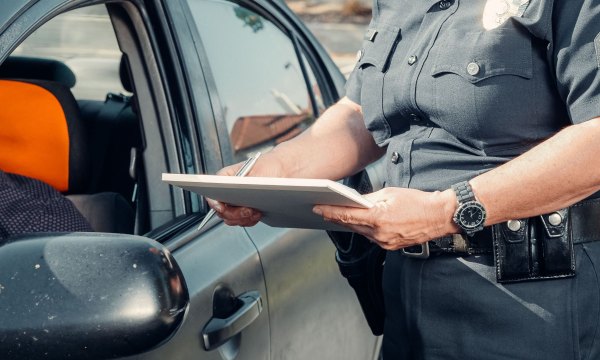
Refusing to provide a breath sample is not a way of avoiding an impaired driving charge. It is its own criminal offence under the Criminal Code, and Parliament deliberately set its penalties at least as high as the offence people refuse to avoid. "I just didn't blow" is not a defence — it is the allegation.
What counts as a refusal
More than saying no. All of the following can be charged as failing or refusing to comply with a demand:
- Saying no, in any form.
- Failing to provide a suitable sample — blowing insufficiently, blowing around the mouthpiece, or repeatedly stopping short. Whether this is a refusal or a genuine inability is often the whole trial.
- Attaching conditions. "I'll blow after I speak to my lawyer" or "I'll do it at the station instead" is treated as a refusal at the roadside stage.
- Delay. The demand requires compliance without unreasonable hesitation; stalling can be enough.
- Silence. Simply not responding to a clear demand can be a refusal.
The demand has to be lawful first
No lawful demand, no offence. Two different demands arise, with different requirements:
- The roadside screening demand. Under mandatory alcohol screening, an officer who is in the lawful execution of their duties and has an approved screening device at hand can demand a sample without suspecting you of anything. Whether the device was actually at hand, and whether the stop was lawful, are real issues.
- The evidentiary breath demand at the station. This one requires reasonable grounds to believe the driver committed an impaired driving offence — grounds that must be made out on the officer's actual observations, not assumed after the fact.
Penalties
A refusal conviction carries a mandatory minimum fine and a mandatory driving prohibition, and the minimum fine for refusal is set higher than the minimum for a first-time over-the-limit conviction — precisely so that refusing carries no advantage. It is a criminal conviction with all that follows: a record, insurance consequences, and potential inadmissibility to the United States. The provincial Immediate Roadside Sanctions consequences can apply as well.
Defences that actually work
- The demand was unlawful. No approved screening device at hand, an unlawful detention, or grounds that do not stand up on examination.
- Reasonable excuse. A genuine physical inability to provide a sample — a respiratory condition, an injury, an acute medical event. This needs evidence, usually medical and sometimes expert; simply saying you have asthma will not carry it.
- You tried and could not. Where the record shows genuine attempts, the question becomes inability rather than refusal, and the officer's own notes often decide it.
- Charter breaches. Right to counsel at the station stage, arbitrary detention, or a search that exceeded what the law allows.
Why people refuse, and why it backfires
The instinct is understandable: no sample, no number, no evidence. In practice it fails on both sides. The refusal itself becomes the offence, with penalties at least as severe. And the officer's observations — driving pattern, odour, speech, balance, admissions — remain available to prove impaired driving in any event. You end up defending two allegations instead of one, having removed the reading that might have been challenged.
Frequently asked questions
Can I call a lawyer before blowing at the roadside?
No. There is no right to consult counsel before providing a roadside screening sample — that is settled, and conditioning your compliance on it is treated as a refusal. You do have the right to counsel before the evidentiary breath test at the station, and that right must be respected properly.
What if the machine was faulty?
That is an argument about the reliability of a reading, not a licence to refuse. If the device malfunctions during a genuine attempt, that is different — and it is why the officer's notes and the device records matter.
Is refusing better than blowing over?
No. The minimum penalties are at least as high, and you lose the ability to attack the reading. There is no scenario in which refusal is the strategically better option.
I have a medical condition. Does that protect me?
It can amount to a reasonable excuse, but it must be established with evidence rather than asserted. Tell your lawyer immediately and gather the medical records early.
What should I actually do at the roadside?
Identify yourself, comply with a lawful demand, and say nothing else about where you were or what you drank. See our impaired driving and refusal page.