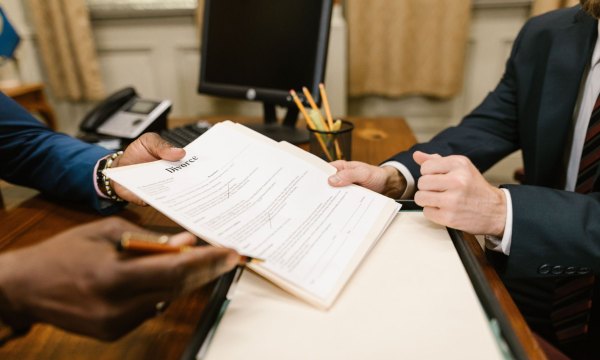
A separation agreement is a written contract that settles the terms of your separation — property, debts, support and parenting — so a judge never has to decide them for you. In Alberta, most separations resolve this way. The agreement only does its job, though, if it deals with everything; the gaps are what bring people back to a lawyer years later.
The clauses every Alberta separation agreement needs
- Who you are and when you separated. The date of separation is not a formality — it anchors property valuation, support calculations and limitation periods.
- Full financial disclosure. Assets, debts, income and pensions, exchanged and attached. An agreement built on an incomplete picture is the easiest kind to overturn.
- Division of family property. Alberta's Family Property Act presumes an equal division of property acquired during the relationship, with exemptions for things like pre-relationship property, gifts and inheritances. The agreement should say what is being divided, what is exempt, and why.
- The family home. Sold, transferred, or kept by one partner — with the mortgage refinanced out of the other's name. Alberta's Dower Act can also give a spouse rights in the home, so agreements usually deal with a dower release.
- Debts. Not just who pays, but an indemnity — a promise to cover the other person if a creditor comes after them anyway. Lenders are not bound by your agreement.
- Spousal or partner support. Amount, start date, duration, whether it can be reviewed, and on what basis — or a clear release, if that is the deal.
- Child support. The table amount based on the payor's income, plus how section 7 special expenses are shared.
- Parenting. Decision-making responsibility and a parenting schedule specific enough to follow without argument — including holidays, travel and communication.
- Pensions and registered savings. How each is valued and divided, and who bears the tax.
- Releases. The clause that makes the agreement final, so neither of you can reopen settled issues later.
- Dispute resolution. What happens when you disagree — mediation or arbitration before court.
- Independent legal advice. Certificates from each partner's own lawyer, attached to the agreement.
The clauses people forget
These are the ones that generate the phone calls years later:
- Life insurance securing support. If the payor dies, support stops — unless the agreement requires insurance naming the recipient, and a way to confirm it stays in force.
- Which parent claims the children for tax credits and benefits.
- Health and dental coverage — whether a spouse can stay on a workplace plan, and for how long.
- How section 7 expenses get approved before they are incurred, so nobody is billed for a decision they never agreed to.
- What happens on remarriage or a new common-law relationship.
- Enforcement. Whether support is registered with Alberta's Maintenance Enforcement Program, which collects on the recipient's behalf instead of leaving them to chase payments.
- Hidden or forgotten assets. A clause that reopens the property division if something material was not disclosed. See what to do when you suspect assets are being hidden.
What a separation agreement cannot do
Two limits catch people out. First, it does not divorce you. A separation agreement settles the terms; ending the marriage requires a divorce judgment from the Court of King's Bench. Second, it cannot put children's arrangements beyond the reach of a court. Parenting and child support are assessed on the child's best interests and the Guidelines at the time — an agreement that shortchanges a child can be set aside, because child support belongs to the child rather than to the parent receiving it.
What makes the agreement stick
Alberta courts uphold agreements that were properly made and set aside agreements that were not, and the analysis is almost always about process rather than terms: honest disclosure, independent legal advice for each partner, and a signature given freely rather than under pressure. The same test governs marriage agreements — we set it out in detail on what Alberta courts check before enforcing a domestic agreement.
Frequently asked questions
Do we each need our own lawyer?
Yes. One lawyer cannot advise both partners — the interests conflict. One of you can have an agreement drafted, but the other must take it to their own lawyer for independent advice before signing.
Do we have to file it with the court?
Not to make it binding — it is a contract. But support terms are often filed so they can be enforced through the Maintenance Enforcement Program, and the agreement is normally incorporated when the divorce judgment is granted.
Can we change it later?
By consent, at any time, in writing. Without consent, it depends on the clause: support is more open to variation on a material change in circumstances than a final property division is.
Can we sort this out without going to court at all?
Usually, yes — that is the point of an agreement. Where the two of you need help getting there, collaborative family law and mediation are built for exactly this.